5 Pre-Labour Day Checks For Commercial Fire Doors & Panic Bars
Ben's Lock and Security • August 19, 2026
Preparing your commercial property for the long Labour Day weekend means making sure your security hardware actually works. A closed business in Guelph needs robust physical protection to deter unauthorized entry when no one is around. At Bens Lock and Security, we frequently encounter commercial doors that look secure but fail basic functional tests. Running a quick check on your exit hardware guarantees that your building meets safety codes and remains locked down tight.
Many facility managers assume their doors are fine simply because they open and close during normal business hours. However, heavy daily traffic slowly degrades latches, hinges, and strike plates. Finding these weak points before a holiday closure prevents emergency lockouts or security breaches. Following a few specific inspection steps will give you peace of mind while you are away from the shop.
In This Article:
- Tip #1: Test the Panic Bar Latch Retraction
- Tip #2: Inspect the Fire Door Closing Speed
- Tip #3: Check the Alignment of Metal Frames
- Tip #4: Verify the Key Override Cylinders
- Tip #5: Clean the Bottom Sweep and Threshold
- Frequently Asked Questions
Test the Panic Bar Latch Retraction
A panic bar must release the latch smoothly the moment you push the crash bar forward. If you feel grinding or significant resistance, the internal linkages are either bent or lacking proper lubrication. A sticking panic bar installation compromises emergency exits and leaves the door vulnerable to being pried open from the outside.
- Mechanical Resistance: Push the bar slowly to feel for any catching points along the internal travel path.
- Latch Clearance: Watch the latch bolt to ensure it fully retracts flush with the edge of the metal door.
- Strike Plate Wear: Look for heavy scrape marks on the strike plate which indicate the door hinges are sagging.
Inspect the Fire Door Closing Speed
Fire-rated doors and metal frames only protect your building if the door actually latches shut completely on its own. The hydraulic fluid inside commercial door closers often thickens or leaks, completely changing how the door swings. A door that slams damages the frame, while a door that closes too slowly might not build enough momentum to click into the strike plate.
- Visual Leaks: Check the metal body of the door closer for dark oil drips running down the face of the door.
- Swing Timing: Open the door fully and count how many seconds it takes to close and latch securely.
- Latching Force: Verify that the door clicks firmly into the frame without needing a physical push from a person.
Check the Alignment of Metal Frames
Commercial metal frames can warp over time from building settlement or accidental forklift impacts. When the frame shifts out of square, the door binds against the jamb and prevents the locking hardware from engaging properly. Our frame installation experts know that even a quarter inch of settling can render a commercial deadbolt completely useless.
- Rub Marks: Inspect the top and side edges of the door for shiny metal spots where paint has scraped off.
- Even Gaps: Look at the clearance space between the door and the frame to see if it is wider at the top or bottom.
- Hinge Screws: Check the hinge plates to make sure all screws are tight and sitting flush against the metal.
Verify the Key Override Cylinders
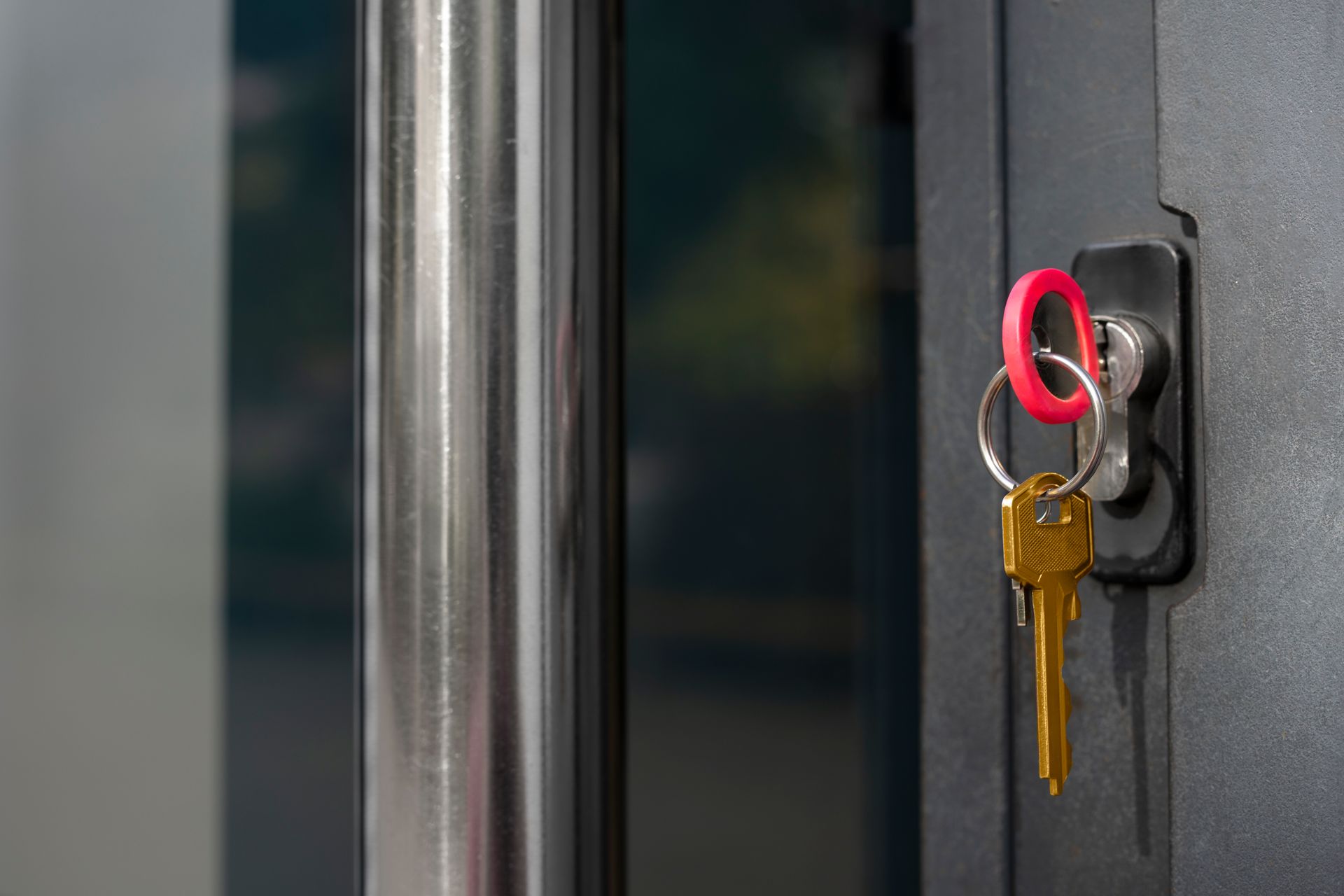
Panic bars and commercial doors usually feature an exterior key cylinder to allow staff access from the outside. These cylinders gather dirt, grit, and moisture, which causes the internal brass pins to seize up over time. Finding out your key does not turn on a holiday weekend usually results in a costly emergency service call.
- Key Insertion: Slide your primary business key into the lock to feel for snags or rough spots.
- Turning Action: Turn the key fully in both directions to ensure it moves the latch mechanism without excessive force.
- Cylinder Housing: Check that the metal collar around the lock cylinder is tight against the door face so it cannot be twisted off.
Tip #5: Clean the Bottom Sweep and Threshold
Debris naturally builds up on the floor threshold and gets trapped under the rubber door sweep. This buildup forces the door upward, putting severe stress on the top hinge and preventing the latch from aligning with the strike. Keeping this area clear is a simple maintenance step that dramatically extends the life of your commercial doors.
- Debris Removal: Sweep out any small rocks or hardened dirt from the grooves of the metal floor threshold.
- Rubber Integrity: Check the rubber sweep on the bottom of the door for tears or missing sections that let cold air inside.
- Floor Clearance: Open the door halfway and ensure it does not drag or scrape against the concrete floor surface.
Frequently Asked Questions
What is the life expectancy of a commercial panic bar?
A high quality panic bar typically lasts ten to fifteen years in a moderate traffic environment. However, heavy abuse or constant exposure to outdoor elements will shorten that lifespan significantly. Mechanical failure usually starts with broken return springs or stripped dogging mechanisms that fail to hold the crash bar down.
How often should commercial fire doors be inspected?
Building codes require a visual and operational inspection of fire doors at least once a year. This check ensures the door closer mechanism brings the door to a complete latch without manual help. Sagging hinges or modified aftermarket hardware instantly void the fire rating and put the property at risk during an inspection.
Can any locksmith install a fire-rated door frame?
Properly installing fire-rated hardware requires specific trade knowledge regarding local building codes and acceptable wall clearances. Standard residential installers often use incorrect fasteners or fail to properly grout the hollow metal frames. Using a professional ensures the installation maintains its structural integrity and passes strict municipal safety inspections.
Secure Your Guelph Business Before The Holiday
Finding a mechanical issue during your hardware inspection gives you time to fix it before the long weekend begins. Fixing a sagging door or a stiff panic bar guarantees that your property stays protected while your staff takes a well deserved break. Reach out to schedule a commercial hardware service so you can lock up with absolute confidence.
Share This Blog